
 Behavior Neuroscience (NEUR-320)
This upper-level course with laboratory examines the etiology of behavior as a product of evolution combined with the development of the central nervous system and life experiences. Specific emphasis is placed on the developmental patterns of neural systems that regulate innate behaviors and mechanisms of plasticity that underlie the expression of processes such as learning, memory, motivation, and emotions. We also discuss how dysregulation of specific brain networks can lead to addiction, affective and mood disorders. Students are introduced to cutting-edge technologies to study how the manipulation of specific neural circuits is sufficient and necessary to trigger natural behaviors such as feeding, drinking, fear, and aggression.
Behavior Neuroscience (NEUR-320)
This upper-level course with laboratory examines the etiology of behavior as a product of evolution combined with the development of the central nervous system and life experiences. Specific emphasis is placed on the developmental patterns of neural systems that regulate innate behaviors and mechanisms of plasticity that underlie the expression of processes such as learning, memory, motivation, and emotions. We also discuss how dysregulation of specific brain networks can lead to addiction, affective and mood disorders. Students are introduced to cutting-edge technologies to study how the manipulation of specific neural circuits is sufficient and necessary to trigger natural behaviors such as feeding, drinking, fear, and aggression.
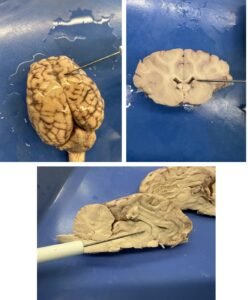 Neuroanatomy (NEUR-450)
This course provides a historical perspective on advances in the field of neuroanatomy from the molecular level to behavioral endpoints. The course also introduces students to modern technologies used to map neural connections and the advantages, limitations, and ethical principles and implications of such technologies.
Neuroanatomy (NEUR-450)
This course provides a historical perspective on advances in the field of neuroanatomy from the molecular level to behavioral endpoints. The course also introduces students to modern technologies used to map neural connections and the advantages, limitations, and ethical principles and implications of such technologies.
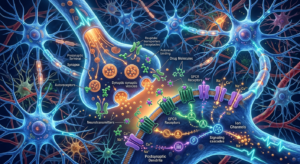 Neuropharmacology (NEUR-450)
This course explores the use of drugs as probes to identify cellular mechanisms and neural systems for typical and abnormal behaviors and to advocate for awareness of substance use and abuse for mental health. Students are introduced to the functional organization of the nervous system and its synaptic transmitters and modulators as a basis for understanding the drug’s actions. We examine the history of drug development, the mechanisms of drug actions, and the rationale for applying specific medications to treat brain disorders. General strategies, methods, and challenges of drug discovery are also addressed.
Neuropharmacology (NEUR-450)
This course explores the use of drugs as probes to identify cellular mechanisms and neural systems for typical and abnormal behaviors and to advocate for awareness of substance use and abuse for mental health. Students are introduced to the functional organization of the nervous system and its synaptic transmitters and modulators as a basis for understanding the drug’s actions. We examine the history of drug development, the mechanisms of drug actions, and the rationale for applying specific medications to treat brain disorders. General strategies, methods, and challenges of drug discovery are also addressed.